Prime Day Is Coming
May 20, 2026
Are you only earning half of what you could?
Quick Answer
Buyer intent peaks in July. If you’re already set up to capture it from both directions, you’re in a different position than most. Pinterest content doesn’t perform on the day you post it.

What is the difference between onsite and offsite Amazon income?
Two types of income show up in your Amazon dashboard. Most creators treat them the same. They aren’t.
Onsite is what happens inside Amazon. Your videos appear on product pages, in search results, in recommendation carousels. Amazon decides which videos show, how often, and for how long. What Amazon rewards isn’t views — it’s conversion. And what qualifies for a commission has gotten significantly narrower — and the community felt it. For years, AIP creators earned on halo sales — purchases a shopper made beyond the product you reviewed, just because they clicked through your content first. That window has largely closed. Amazon now pays on the product in your video and sometimes related items, but what counts as “related” is Amazon’s call and it isn’t defined anywhere publicly. What you can control is which products you choose to review. Creators who research conversion potential before recording are seeing that work pay off.
Offsite is what happens when you send traffic to Amazon from somewhere else — YouTube, Pinterest, a blog post, or Instagram. A 24-hour attribution window starts when someone clicks your link. If they buy within that window, you potentially get the commission. That part still holds. But like onsite, incidental purchases are less reliably credited than they used to be.
Both income streams are tightening. Prime Day is where that gap becomes most visible.
When should I start preparing for Prime Day?
Buyer intent peaks in July. If you’re already set up to capture it from both directions, you’re in a different position than most.
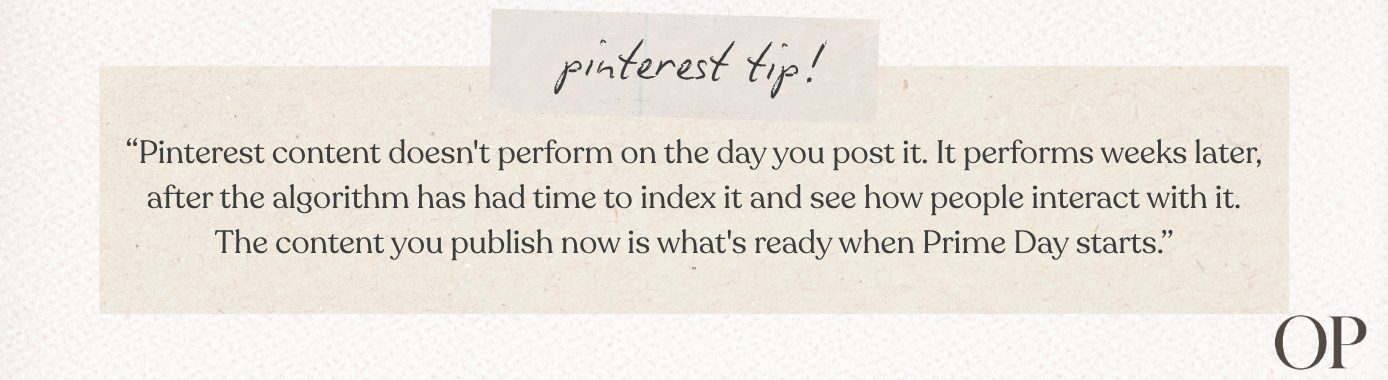
Let’s remember, Pinterest is a search engine. When someone types “best air fryer for a large family” in July, they aren’t scrolling casually. They’re deciding. If your pin is already indexed and has been building authority for six weeks, you’re in that result. Pinterest content doesn’t perform on the day you post it. It performs weeks later, after the algorithm has had time to index it and see how people interact with it. If you’re new to thinking about Pinterest this way, read the article below first. The content you publish now is what’s ready when Prime Day starts.
How do Creator Connections bonuses work?
If you’re at Bronze tier or above, you can opt into Creator Connections brand campaigns that pay a bonus commission on top of your standard Amazon rate — anywhere from 10% to 50%, set by the brand. Campaigns run on a fixed budget. When the budget is gone, the campaign closes — even if the end date hasn’t arrived yet. Early movers capture the budget.
During Prime Day, a pin sending someone to your storefront while a brand is running a Creator Connections campaign on that product pays your standard commission plus the brand’s bonus rate. Two income sources, one click. A pin sending someone to your storefront during an active Creator Connections campaign earns your standard commission plus the brand's bonus rate — from the same click.
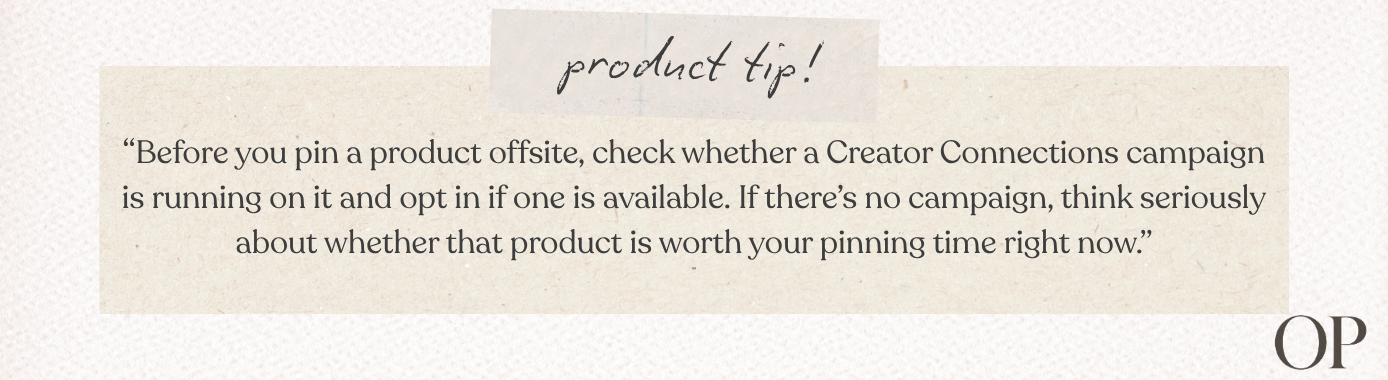
Before you pin a product offsite, check whether a Creator Connections campaign is running on it and opt in if one is available. If there’s no campaign, think seriously about whether that product is worth your pinning time right now. And if there is one, check how long it has left — a pin takes weeks to perform, and a campaign that closes next week won’t still be running when your pin finds its audience.
How can I get ready for Prime Day now?
Start with what you already have.
If you’ve been uploading videos exclusively to Amazon, those same videos can go to YouTube. YouTube is searchable, it builds long-term authority, and it gives Pinterest an additional source to link to.
Tools to Help You Scale Quickly
I have referral relationships with the tools below. The discount codes are mine and I earn a small commission if you use them.
If you have a library of existing videos sitting only on Amazon, Cha-Ching Automate was built for exactly this situation — it automates mass uploads so you’re not doing it one video at a time. Use code Barb10 for 10% off.
Once your videos are on YouTube, pins come next. Each video is a pin — and it shouldn’t stop at one. Create 3 to 5 pins per video, vary the images and descriptions, and schedule them days apart. Each one is a separate search result waiting to happen in July.
OINK for Influencers is a Chrome extension that streamlines the pinning process using the Amazon x Canva integration — it lets you pull official, compliant product images by ASIN directly into Canva, build your graphic, and get it posted without downloading anything or worrying about image rights. Use code BARB for 10% off.
Viral Vue lets you pin your AIP video directly to Pinterest from inside the app — but don’t stop there. That same product deserves a second pin pointing to your YouTube video. Same product, different destination, twice the presence in search. Use code WELCOME10 for 10% off.
And don’t stop at the US. Earning from international clicks requires applying to each country’s Amazon program separately and uploading your videos to each storefront individually. The good news: existing AIP creators are almost always approved instantly. Cha-Ching Automate is the only tool that automates mass uploading your existing video library to international storefronts, and it integrates directly with GeniusLink to handle link routing across countries. Amazon Singapore is worth adding to your list — it’s become a hot topic lately for those in the know.
What disclosures do I need before posting Amazon links offsite?
Two things that protect your account.
Every platform where you post an Amazon link needs a disclosure in the description — and I take an extra step and include it in my bio sections too. Amazon's required language is "As an Amazon Associate I earn from qualifying purchases" — use that phrase specifically, or something substantially similar that names Amazon and the earning relationship clearly. No disclosure is a TOS violation regardless of how long you've been in the program.
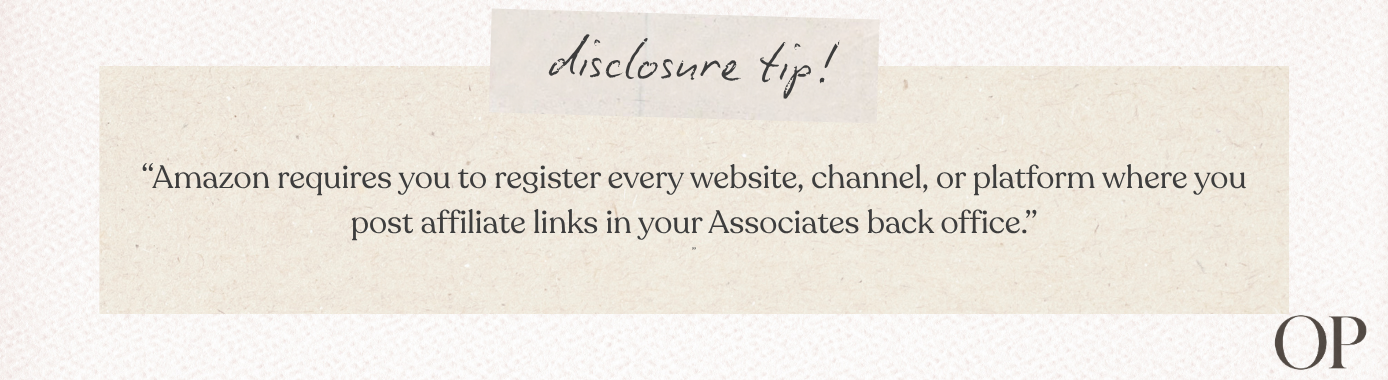
Second, Amazon requires you to register every website, channel, or platform where you post affiliate links in your Associates back office. That means your YouTube channel URL, your blog, your newsletter. If you’re posting links somewhere that isn’t registered, you’re operating outside the terms. Log into your Associates account, go to your account settings, and make sure every active platform is listed.
Neither of these takes more than a few minutes. Both of them matter, immensely.
June is late. May is the window. Let’s get to work.
What you are doing to get ready for Prime Day? Drop a note in the Facebook group on what you're working on. I read every one.
Frequently Asked Questions
What is the difference between onsite and offsite Amazon income?
Onsite is what happens inside Amazon. Offsite is what happens when you send traffic to Amazon from somewhere else — YouTube, Pinterest, a blog post, or Instagram.
How do Creator Connections bonuses work?
If you’re at Bronze tier or above, you can opt into Creator Connections brand campaigns that pay a bonus commission on top of your standard Amazon rate — anywhere from 10% to 50%, set by the brand. Campaigns run on a fixed budget.
How many pins should I make per video?
Create 3 to 5 pins per video, vary the images and descriptions, and schedule them days apart.
What disclosure do I need when posting Amazon links?
Amazon's required language is "As an Amazon Associate I earn from qualifying purchases" — use that phrase specifically, or something substantially similar that names Amazon and the earning relationship clearly. No disclosure is a TOS violation regardless of how long you've been in the program.
Struggling with trying to figure out the Amazon Influencer Program? After reading this guide, you'll know what to film next and have a manageable plan for getting to your first 100 videos.
About Barb | Founder of Storefront Launch
Barb was working with brands before “content creator” was a job title.
Back in 2008, she helped develop branded Twitter parties: live, hashtag-based conversations that brought companies and consumers together. She helped turn those conversations into something brands could buy, then spent years pitching campaigns, recruiting paid bloggers, organizing events, and teaching other women how to use social media for business.
She was part of the original wave of “mommy bloggers” (because apparently women building successful online businesses needed a cute little nickname). Her work included brand ambassador roles with Disney, Kraft, Verizon, and GMC.
Today, Barb brings that experience—and a master’s degree in education—to Storefront Launch. She helps women make sense of Amazon Influencer, Walmart Creator, and affiliate marketing, with practical ways to earn from the content they’re already creating. Less hype. More “okay, here’s how you actually do it.” Because, to loosely quote Lin-Manuel Miranda, she was “in the room where it happen(ed).”